








MATERIALITY OF TOSHIBA TEC
REVIEW PROCESS
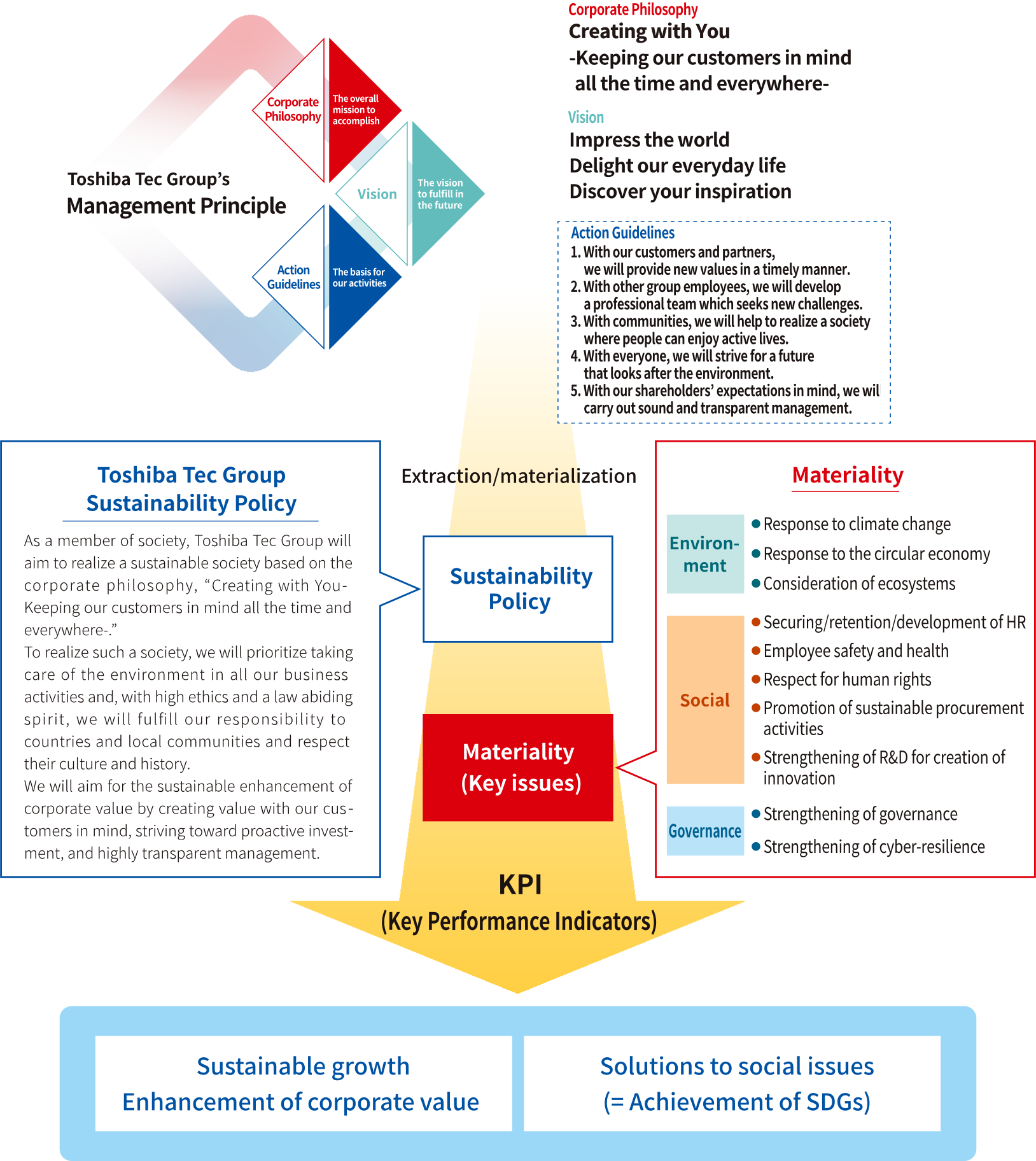
Toshiba Tec Group will contribute to solutions to social issues by achieving KPIs (numerical targets) which are set for the Materiality (key issues) identified in our Management Principle.
Based on our Management Principle, which consists of our Corporate Philosophy, Vision, and Action Guidelines, we have developed the Sustainability Policy and the Materiality (key issues) extracted and materialized from Action Guidelines.
Toshiba Tec Group will realize further sustainable growth and enhancement of corporate value by addressing the Materiality. We will also contribute to the achievement of the SDGs by addressing solutions to social issues.
FY2024 RESULTS AND FY2025-FY2027 TARGETS
To achieve sustainable growth over the medium- to long-term, we will strive to contribute to achieving the SDGs by reviewing each KPI in the Mid-Term Business Plan (FY2025-FY2027) and optimizing target figures.
| ESG | Materiality | Category (KPI) | FY2024 End Target | FY2025 End Target | FY2026 End Target | FY2027 End Results | Relevant SDGs |
|---|---|---|---|---|---|---|---|
| EnvironmentE | Response to climate change | Total GHG emissions in business activities (thousand t-CO2) | 14.9 | 7.7*2 | 6.2*2 | 4.5*2 |       |
| Total GHG emissions from the use of products sold (compared with FY2019 results) | -28.2% | -14.0% | -16.8% | -19.6% | |||
| Response to the circular economy | Total waste emission intensity in business activities | 15% improvement in 5-year average intensity |
1% improvement in 5-year average intensity |
1% improvement in 5-year average intensity |
1% improvement in 5-year average intensity |
||
| Percentage of recycled plastic used in products and services | 12% | 12% or more | 12% or more | 12% or more | |||
| Consideration of ecosystems | Total chemical substances emission intensity in business activities | 12% improvement in 5-year average intensity |
1% improvement in 5-year average intensity |
1% improvement in 5-year average intensity |
1% improvement in 5-year average intensity |
||
| Received water volume intensity in business activities | 18% improvement in 5-year average intensity |
1% improvement in 5-year average intensity |
1% improvement in 5-year average intensity |
1% improvement in 5-year average intensity |
|||
| SocialS | Securing/retention/development of HR | Ratio of female managers | 6.2% | 7.0% | 8.0% | 8.5% |        |
| Ratio of new female graduates employed*1 | 41.1% | 30% | 33% | 35% | |||
| Rate of male employees taking childcare leave | 29.5% | Higher than the previous fiscal year | Higher than the previous fiscal year | Higher than the previous fiscal year | |||
| Rate of attendance of training programs by position | 99.8% | 100% | 100% | 100% | |||
| Engagement survey | Engagement score: 57 |
1 point or more improved from the previous fiscal year | 1 point or more improved from the previous fiscal year | 1 point or more improved from the previous fiscal year | |||
| Employee safety and health | No fatal accidents | 0% (No accidents) | 0% (No accidents) | 0% (No accidents) | 0% (No accidents) | ||
| Number of employees with metabolic syndrome | 34.1% | Fewer than the previous fiscal year | Fewer than the previous fiscal year | Fewer than the previous fiscal year | |||
| Respect for human rights | Communication of top management message about human rights | Once (Dec.) | Once (Dec.) | Once (Dec.) | Once (Dec.) | ||
| Harassment education | Once-yearly e-learning program (Taken by 100%) Harassment survey | Once-yearly e-learning program (Taken by 100%) Harassment survey | Once-yearly e-learning program (Taken by 100%) Harassment survey | Once-yearly e-learning program (Taken by 100%) Harassment survey | |||
| Appropriate responses to human rights risks | 100% of whistleblowing cases dealt with | 100% of whistleblowing cases dealt with | 100% of whistleblowing cases dealt with | 100% of whistleblowing cases dealt with | |||
| Human rights due diligence initiatives | Establish human rights due diligence framework and guidelines Conduct internal human rights self-assessment | Rate of internal human rights self-assessments conducted: 100% Corrective/improvement actions taken:100% | Re-implement evaluation of impact on human rights Rate of internal human rights self-assessments conducted: 100% Corrective/improvement actions taken: 100% | Rate of internal human rights self-assessments conducted: 100% Corrective/improvement actions taken: 100% | |||
| Promotion of sustainable procurement activities | Rate of receipt of procurement policy endorsements (= Rate of signing of Basic Transaction Agreements) | 100% | 100% | 100% | 100% | ||
| Number of suppliers completing supplier sustainability survey | 180 companies | 180 companies | 180 companies | 180 companies | |||
| Number of education sessions about sustainable procurement | Internal education sessions held: Once each | Internal education sessions held: Once each | Internal education sessions held: Once each | Internal education sessions held: Once each | |||
| Strengthening of R&D for creation of innovation | Number of AI personnel (Number of employees who have passed JDLA Deep Learning for General exam - cumulative) | 139 | 150 | 160 | 170 | ||
| GovernanceG | Strengthening of governance | Rate of attendance of Standards of Conduct education (e-Learning) | 100% | 100% | 100% | 100% | |
| Positive evaluation in Board of Directors Effectiveness Evaluation Survey | 4.0 points | Higher than the previous fiscal year | Higher than the previous fiscal year | Higher than the previous fiscal year | |||
| Ongoing implementation of voluntary monitoring program of internal control systems targeting all Group companies | Once | Once | Once | Once | |||
| Strengthening of cyber-resilience | Self-evaluation of degree of cyber security maturity | 3.74 | Higher than the previous fiscal year | Higher than the previous fiscal year | Higher than the previous fiscal year |
- Recorded based on fiscal year of activities (FY2024 result: new recruits joining in April 2025)
- The Group’s total emissions reflecting the impact of business integration with Ricoh Company, Ltd., and transfer of inkjet head business to RISO KAGAKU CORPORATION
Corporate Data
-
- Topics
- CEO Message
- Message from Chief Sustainability Officer
- Toshiba Tec Group Sustainability Policy and Materiality KPI
- Special Feature SDGs x Toshiba Tec
- Environment
- Social
- Governance
- Feature: 5-Minute Guide—Toshiba Tec CSR Activities
- Integrated Report